Flatbed Trailers for General Cargo, Containers and International Transport
Alura Trailer manufactures flatbed trailers for general cargo, container transport, construction materials, steel products and international logistics operations. Explore flatbed trailer types, applications, advantages and investment planning tools.
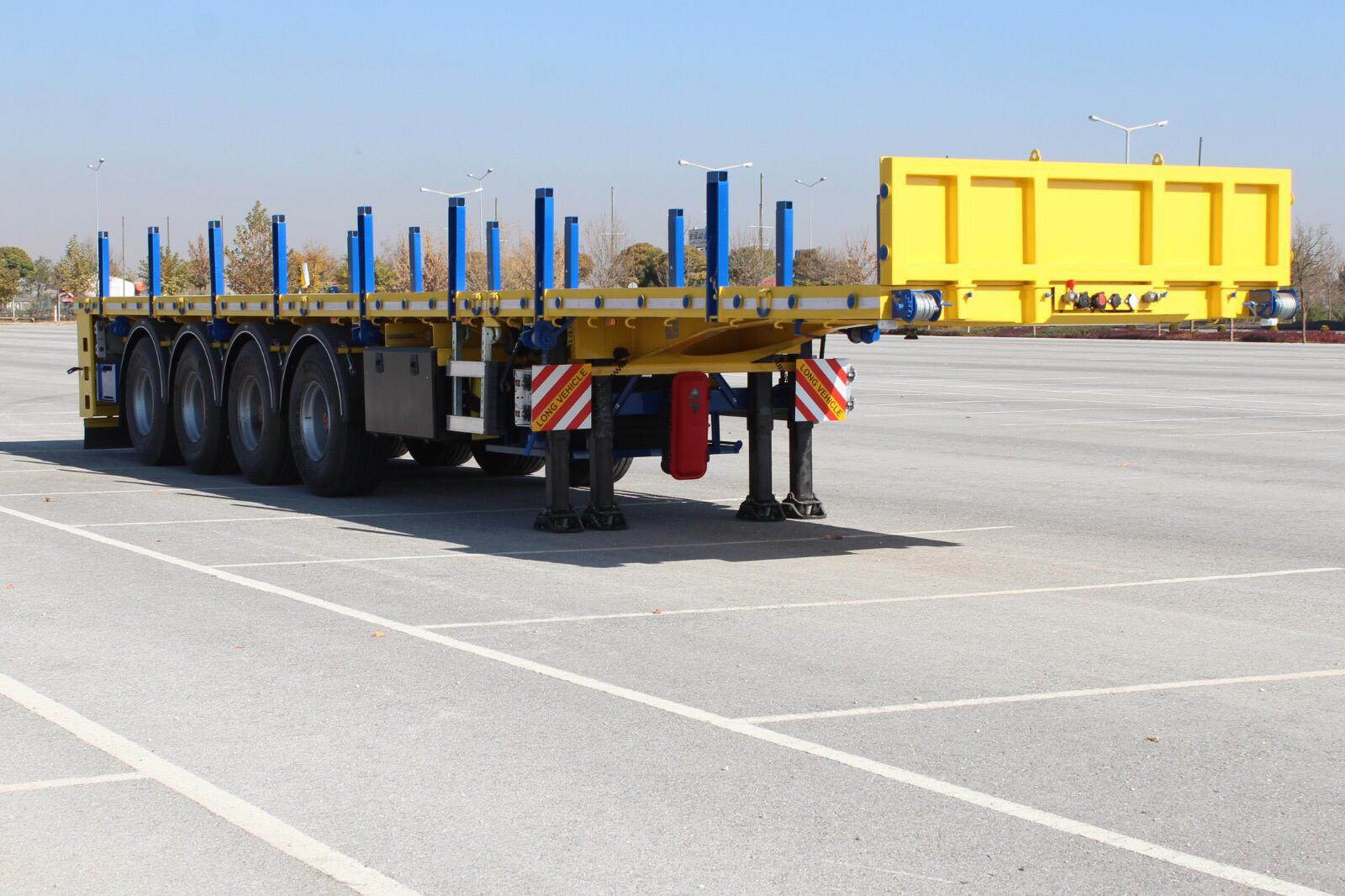
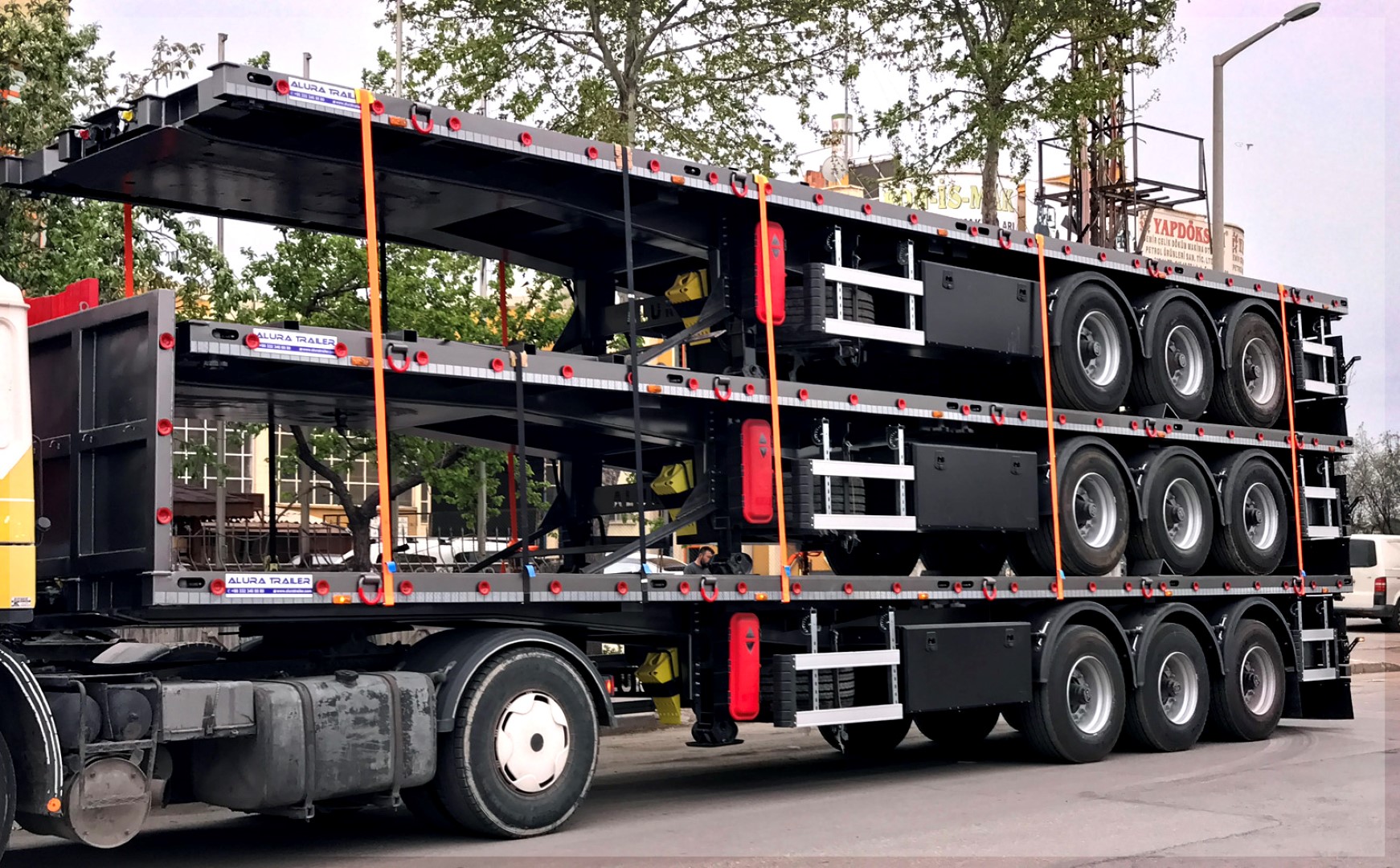
A flatbed trailer is an open-platform semi-trailer designed for transporting cargo that does not require a closed box,
tanker body or tipper structure. It is one of the most flexible trailer types in road transport because loads can be placed
from the top, side or rear depending on the cargo and loading equipment.
Alura Trailer manufactures flatbed trailers for general cargo, container transport, construction materials,
steel products, industrial equipment and international logistics operations. The open deck structure makes flatbeds suitable
for transport companies that need a versatile trailer for different types of freight.
What Are Flatbed Trailers Used For?
Flatbed trailers are used across many logistics sectors because they can carry a wide range of cargo types.
They are especially practical when the load is long, heavy, palletized, irregularly shaped or needs to be loaded by crane or forklift.
General cargo transport
Container transport with suitable twist lock configuration
Steel coil, steel profile and pipe transport
Construction materials and prefabricated elements
Industrial machinery and equipment
Palletized cargo and packed goods
Project cargo and infrastructure materials
International road transport and export logistics
Flexible Loading
Open platform design allows loading from the side, rear or top depending on cargo type.
Multi-Cargo Use
Suitable for general cargo, containers, steel, construction materials and machinery.
Export Ready
Flatbed trailers can be configured for international logistics and different market requirements.
Custom Design
Axles, platform, side boards, lashing points and twist locks can be adapted by project.
Why Do Transport Companies Choose Flatbed Trailers?
Transport companies choose flatbed trailers because they offer operational flexibility.
A single flatbed trailer can be used for different cargo types throughout the year, which can improve fleet utilization
and reduce the need for multiple specialized trailers.
For companies carrying mixed cargo, building materials, containers, steel products or project loads,
a flatbed trailer can be one of the most practical investments in a semi-trailer fleet.
Fleet planning insight:
Flatbed trailers are often preferred by logistics companies that want a versatile semi-trailer for changing cargo demands,
international routes and mixed freight operations.
What Makes Alura Trailer Flatbed Trailers Suitable for International Transport?
International transport requires a trailer structure that is durable, practical and adaptable to different cargo requirements.
Alura Trailer flatbeds can be manufactured according to the customer’s operational needs, road conditions and target export markets.
Depending on the project, a flatbed trailer can include side boards, container locks, lashing rings, toolboxes,
different axle configurations, mechanical or air suspension options and customized platform dimensions.
Strong chassis design for commercial transport
Suitable loading platform for mixed cargo operations
Optional container transport compatibility
Custom lashing and securing points
Side board and front panel options
Different axle and suspension configurations
Export-focused production and project-based customization
Can a Flatbed Trailer Carry Containers?
Yes. A flatbed trailer can be configured for container transport when equipped with suitable twist locks and platform layout.
This allows the trailer to carry containers while still remaining useful for general cargo and other freight types.
For companies that handle both standard cargo and containerized freight, this configuration can increase operational flexibility.
The final design should always be selected according to the container sizes, route conditions and loading requirements.
What Is the Difference Between a Flatbed Trailer and Other Semi-Trailer Types?
A flatbed trailer has an open loading platform, while other trailer types are designed for more specific cargo categories.
For example, lowbed trailers are preferred for heavy machinery, tankers are used for liquids, tippers are used for bulk materials,
and curtainsider or box trailers are used for protected cargo.
If buyers are not sure which trailer type is the right choice, they can use Alura Trailer’s semi-trailer finder tool
to compare different trailer types according to cargo, payload and operation needs.
How Should Buyers Choose the Right Flatbed Trailer?
Choosing the right flatbed trailer depends on the type of cargo, required payload, loading method, road conditions,
destination market and expected return on investment. A trailer used mainly for container transport may require different equipment
than a trailer used for steel, construction materials or mixed cargo.
Before purchasing a flatbed trailer, buyers should define the main transport operation clearly.
This helps determine the correct axle configuration, platform length, side board type, lashing system and optional equipment.
What cargo will the trailer carry most often?
Will the trailer carry containers?
Is side loading or crane loading required?
What payload capacity is needed?
Which countries or routes will the trailer operate in?
Are side boards, twist locks or extra lashing points required?
What is the expected payback period of the investment?
How Can Buyers Estimate the Return on a Flatbed Trailer Investment?
A trailer purchase is not only a technical decision; it is also an investment decision.
Transport companies should consider acquisition cost, expected freight income, fuel impact, maintenance cost,
utilization rate and resale value when evaluating a new flatbed trailer.
Alura Trailer provides a trailer cost and ROI calculator to help buyers estimate the financial return of their trailer investment.
This can support better decision-making before purchasing a new flatbed trailer or expanding a fleet.
Where Can Buyers See Alura Trailer Flatbed Models?
Buyers who want to review flatbed trailer options can visit the Alura Trailer flatbed product page.
This page presents flatbed trailer solutions designed for international transport, general cargo and project-based logistics requirements.
General Cargo, Container Transport and International Logistics
Suitable Cargo
Steel Products, Pipes, Palletized Cargo, Construction Materials, Machinery and Containers
Loading Method
Side Loading, Rear Loading, Forklift Loading and Crane Loading
Platform Type
Open Flat Loading Platform
Optional Equipment
Side Boards, Twist Locks, Lashing Rings, Toolboxes and Front Panel
Configuration
Custom Axle, Suspension and Platform Options
Operation Type
Domestic and International Road Transport
Buyer Tools
Semi-Trailer Finder and Trailer Cost ROI Calculator
Manufacturer
Alura Trailer
Frequently Asked Questions About Flatbed Trailers
What is a flatbed trailer used for?
A flatbed trailer is used for general cargo, containers, steel materials, construction products, machinery,
palletized freight and other loads that can be carried on an open platform.
Is a flatbed trailer suitable for international transport?
Yes. Flatbed trailers are widely used in international road transport because they are versatile, practical and suitable
for many different cargo types.
Can a flatbed trailer carry containers?
Yes. A flatbed trailer can carry containers when it is equipped with suitable twist locks and designed according to the required container sizes.
What is the advantage of an open platform trailer?
The open platform allows easier loading from the side, rear or top.
This is useful for cargo that must be loaded by forklift, crane or other site equipment.
Can flatbed trailers be customized?
Yes. Alura Trailer can manufacture flatbed trailers with customized axle configuration, platform length, suspension type,
side boards, lashing points, twist locks and other project-specific features.
How do I know if I need a flatbed, lowbed, tanker or tipper trailer?
The correct trailer type depends on your cargo, route, payload and loading method.
If you are comparing different trailer types, you can use Alura Trailer’s semi-trailer finder tool.
How can I calculate whether a flatbed trailer investment is profitable?
You can estimate the financial return by considering purchase cost, freight income, utilization rate, maintenance cost
and operating expenses. Alura Trailer’s trailer cost and ROI calculator can help buyers evaluate trailer investment performance.
Flatbed Trailer Manufacturer – Alura Trailer
Alura Trailer manufactures flatbed semi-trailers for general cargo, container transport,
construction materials, steel products and international logistics operations.
With project-based customization, export-focused production and practical loading solutions,
Alura flatbed trailers are designed for transport companies that need flexibility and durability in daily operations.
Not sure whether a flatbed trailer is the best option for your operation?
Use Alura Trailer’s online tools to compare trailer types and estimate the return on your trailer investment.
Flatbed • Lowbed • Tipper • Tanker • Mobile Workshop • ROI Planning • Fleet Investment
We use cookies to improve your experience. See our
Cookie Policy
.
Get a Quick Price
Select the product you are interested in
and enter your e-mail.
We will immediately show an indicative
starting price when available.
✓
Request Received
Indicative Starting Price
Starting price refers to a standard configuration.
Final pricing may vary significantly depending on axle brand,
axle configuration, hydraulic options, steering axles,
extensions, ramps, optional equipment, certification
requirements and destination.