Lowbed Trailers for Heavy Equipment, Construction Machinery and Oversized Cargo Transport
Alura Trailer manufactures lowbed trailers for heavy equipment, construction machinery, oversized cargo and international heavy transport operations. Explore lowbed trailer types, key advantages, applications and buyer considerations.
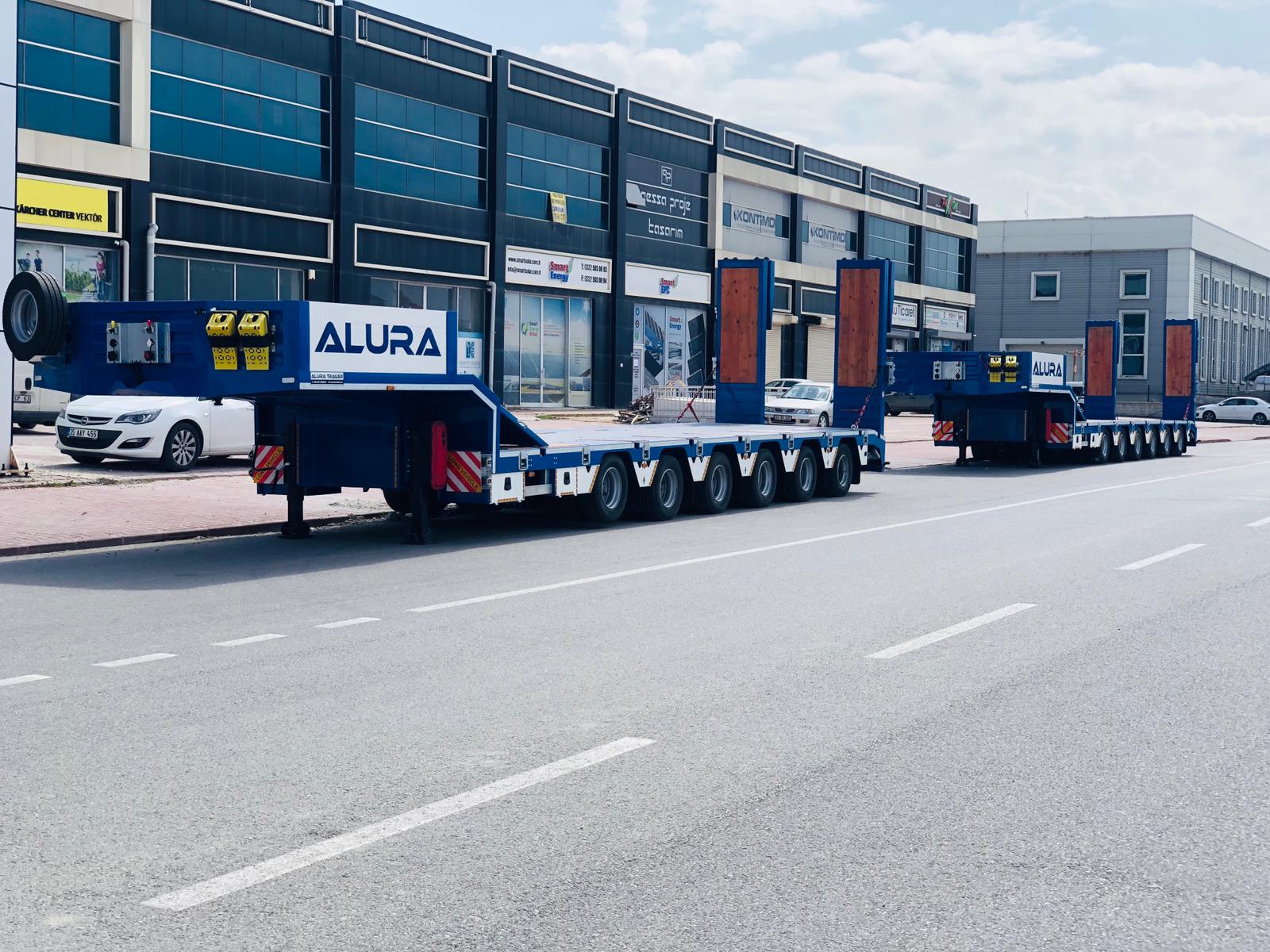
A lowbed trailer is a heavy-duty semi-trailer designed with a low loading platform to carry high, heavy and oversized cargo.
Compared with a standard flatbed trailer, the lower deck height helps reduce the total transport height and improves stability during heavy haulage operations.
Alura Trailer manufactures lowbed trailers for construction machinery, mining equipment, industrial cargo,
infrastructure projects and international heavy transport operations. These trailers are commonly used for transporting excavators,
bulldozers, wheel loaders, cranes, transformers and other large machines.
What Are Lowbed Trailers Used For?
Lowbed trailers are used when the cargo is too heavy, too high or too large for standard semi-trailers.
The low platform makes them one of the most important trailer types for heavy equipment transport and oversized cargo logistics.
Excavator transport
Bulldozer transport
Wheel loader and grader transport
Crane and drilling machine transport
Mining equipment transport
Transformer and industrial equipment transport
Construction machinery transport
Oversized project cargo transport
Infrastructure and energy sector logistics
Low Loading Height
Helps reduce total transport height and improves route compatibility for oversized cargo.
Heavy-Duty Structure
Designed for construction machinery, mining equipment and industrial project cargo.
Custom Axle Options
Available in different axle configurations according to payload and route requirements.
Ramp & Gooseneck Options
Can be configured with hydraulic ramps, mechanical ramps or detachable gooseneck designs.
Why Is Low Deck Height Important in Heavy Transport?
Low deck height is one of the most important design advantages of a lowbed trailer.
When a tall machine such as an excavator or crane is loaded on a low platform, the overall transport height becomes lower.
This can help the vehicle pass under bridges, power lines and height-restricted routes more safely.
A lower center of gravity also supports better stability during transport.
For heavy haulage companies, this is a major advantage when moving large machines over long distances or difficult road conditions.
Heavy transport insight:
The right lowbed trailer is not selected only by payload capacity. Loading height, axle configuration, ramp type,
deck length, suspension system and route limitations are all important factors in professional heavy haulage planning.
What Makes Alura Trailer Lowbeds Suitable for Heavy Equipment Transport?
Alura Trailer lowbed trailers are designed for demanding field conditions and heavy-duty transport tasks.
The structure, axle configuration, loading platform and ramp system can be adapted according to the machine type,
payload requirement and target market.
Depending on the project, lowbed trailers can be manufactured with multiple axles, hydraulic ramps,
mechanical ramps, detachable gooseneck systems, extendable platforms, reinforced chassis structures and different suspension options.
Strong chassis design for heavy machinery transport
Low loading platform for oversized cargo
Multiple axle configurations
Hydraulic ramp and mechanical ramp options
Detachable gooseneck options for specific loading needs
Extendable lowbed options for longer cargo
Custom lashing and securing points
Export-focused production for international markets
Which Lowbed Trailer Type Should Buyers Choose?
The correct lowbed trailer depends on the cargo, payload, loading method, route conditions and legal dimensions in the operating country.
A company transporting excavators may need a different configuration than a company carrying transformers, cranes or long industrial cargo.
For example, a standard lowbed with hydraulic ramps may be suitable for many construction machines,
while a detachable gooseneck lowbed may be preferred when front loading is required.
For longer cargo, an extendable lowbed trailer can provide additional platform length.
Hydraulic ramp lowbed trailers for construction equipment
Mechanical ramp lowbed trailers for practical loading operations
Extendable lowbed trailers for longer cargo
Detachable gooseneck lowbed trailers for special loading requirements
Multi-axle lowbed trailers for higher payload needs
Custom lowbed trailers for project cargo and export operations
How Many Axles Does a Lowbed Trailer Need?
The number of axles depends on the expected payload, road regulations, load distribution and operating routes.
Lowbed trailers can be manufactured with different axle configurations to match the required carrying capacity and legal axle load limits.
A lighter construction machine may require fewer axles, while heavy mining equipment or industrial cargo may require a multi-axle lowbed trailer.
Professional selection should consider not only the cargo weight but also axle load, king-pin load, route conditions and transport permits.
What Is the Difference Between a Lowbed Trailer and a Flatbed Trailer?
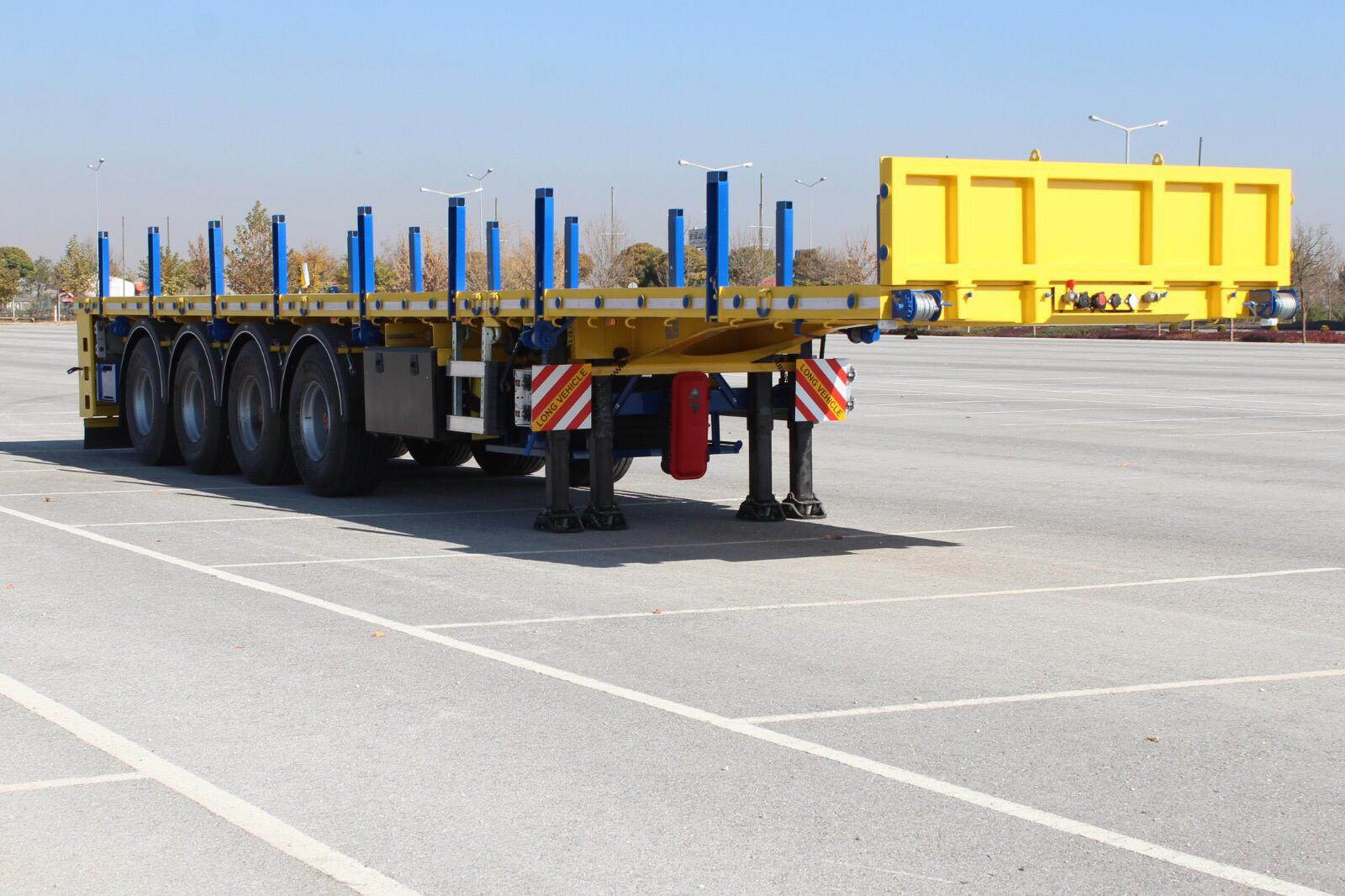
A flatbed trailer has a higher and generally straight open loading platform, making it suitable for general cargo,
containers, steel products and construction materials. A lowbed trailer has a lower loading deck and is designed for heavy machinery,
oversized cargo and high equipment that requires reduced transport height.
If the main cargo is excavators, bulldozers, loaders, cranes or heavy industrial machinery, a lowbed trailer is usually the more suitable choice.
If the main cargo is general freight, containers or palletized goods, a flatbed trailer may be more practical.
What Should Buyers Check Before Ordering a Lowbed Trailer?
Before ordering a lowbed trailer, buyers should define the exact machines or cargo types they plan to transport.
Payload alone is not enough for correct trailer selection. The machine dimensions, ground clearance, loading angle, route restrictions and legal limits should also be considered.
Maximum cargo weight
Machine length, width and height
Required loading angle
Ramp type: hydraulic, mechanical or detachable gooseneck
Required deck length and deck height
Axle number and axle load limits
Suspension type and road conditions
King-pin load and tractor compatibility
Route permits and country-specific regulations
Lashing points and cargo securing requirements
Where Can Buyers See Alura Trailer Lowbed Models?
Buyers who want to review Alura Trailer lowbed solutions can visit the official lowbed product range page.
This page includes different lowbed trailer options for heavy equipment, construction machinery, mining equipment and oversized cargo transport.
How Can Buyers Compare Lowbed Trailers with Other Semi-Trailer Types?
A lowbed trailer is the right solution for many heavy-duty transport operations, but not every cargo requires a lowbed.
Some buyers may need a flatbed, tipper, tanker, extendable trailer or mobile workshop depending on their business model and cargo type.
For buyers comparing different trailer types, Alura Trailer provides an online semi-trailer finder tool.
This helps users understand which trailer type may be more suitable according to cargo, payload and operation requirements.
How Can Buyers Estimate the Return on a Lowbed Trailer Investment?
Lowbed trailers are strategic assets for heavy transport companies.
Before purchasing, buyers should evaluate acquisition cost, expected freight rates, operating routes, maintenance costs,
utilization rate and potential resale value.
Alura Trailer’s trailer cost and ROI calculator can help buyers estimate the financial return of their trailer investment.
This is especially useful for companies planning fleet expansion or entering heavy equipment transport operations.
Semi-Trailer Finder and Trailer Cost ROI Calculator
Manufacturer
Alura Trailer
Frequently Asked Questions About Lowbed Trailers
What is a lowbed trailer used for?
A lowbed trailer is used for transporting heavy equipment, construction machinery, oversized cargo,
mining machines, industrial equipment and other large loads that require a low loading platform.
Why is a lowbed trailer better for excavator transport?
Excavators are often high and heavy machines. A lowbed trailer reduces the total transport height and provides a more stable platform,
making it more suitable for excavator transport than many standard trailer types.
Can a lowbed trailer carry bulldozers and loaders?
Yes. Lowbed trailers are commonly used for bulldozers, wheel loaders, graders, drilling machines, cranes and similar construction equipment.
Can Alura Trailer manufacture multi-axle lowbeds?
Yes. Alura Trailer can manufacture lowbed trailers with different axle configurations according to payload capacity,
axle load limits, route conditions and customer requirements.
What is the difference between hydraulic ramp and detachable gooseneck lowbed?
A hydraulic ramp lowbed is loaded from the rear using ramps. A detachable gooseneck lowbed allows front loading by separating the gooseneck,
which can be useful for certain machines and special heavy transport operations.
Can lowbed trailers be extendable?
Yes. Lowbed trailers can be manufactured with extendable platforms when longer cargo or special project loads require additional deck length.
How do I choose the right lowbed trailer?
The right lowbed trailer depends on cargo weight, cargo dimensions, loading method, axle load limits, tractor compatibility,
road conditions and legal transport restrictions in the operating countries.
Lowbed Trailer Manufacturer – Alura Trailer
Alura Trailer manufactures lowbed semi-trailers for heavy equipment, construction machinery,
mining equipment, industrial cargo and oversized transport operations.
With multiple axle configurations, low deck structures, ramp options and project-based customization,
Alura lowbed trailers are designed for professional heavy haulage companies and international transport operations.
Not sure which lowbed configuration is suitable for your cargo?
Use Alura Trailer’s online tools to compare trailer types and estimate the return on your trailer investment.
Lowbed • Heavy Equipment • Oversized Cargo • Multi-Axle • Hydraulic Ramp • Detachable Gooseneck • ROI Planning
We use cookies to improve your experience. See our
Cookie Policy
.
Get a Quick Price
Select the product you are interested in
and enter your e-mail.
We will immediately show an indicative
starting price when available.
✓
Request Received
Indicative Starting Price
Starting price refers to a standard configuration.
Final pricing may vary significantly depending on axle brand,
axle configuration, hydraulic options, steering axles,
extensions, ramps, optional equipment, certification
requirements and destination.