6 Axle Lowbed Semi Trailer – Ultra Heavy & Oversized Cargo Transport
Alura Trailer's 6 Axle Lowbed Semi Trailer is engineered for ultra-heavy construction machinery, mining equipment and oversized project cargo, featuring six-axle load distribution, reinforced chassis, low deck height and configurable steering systems.
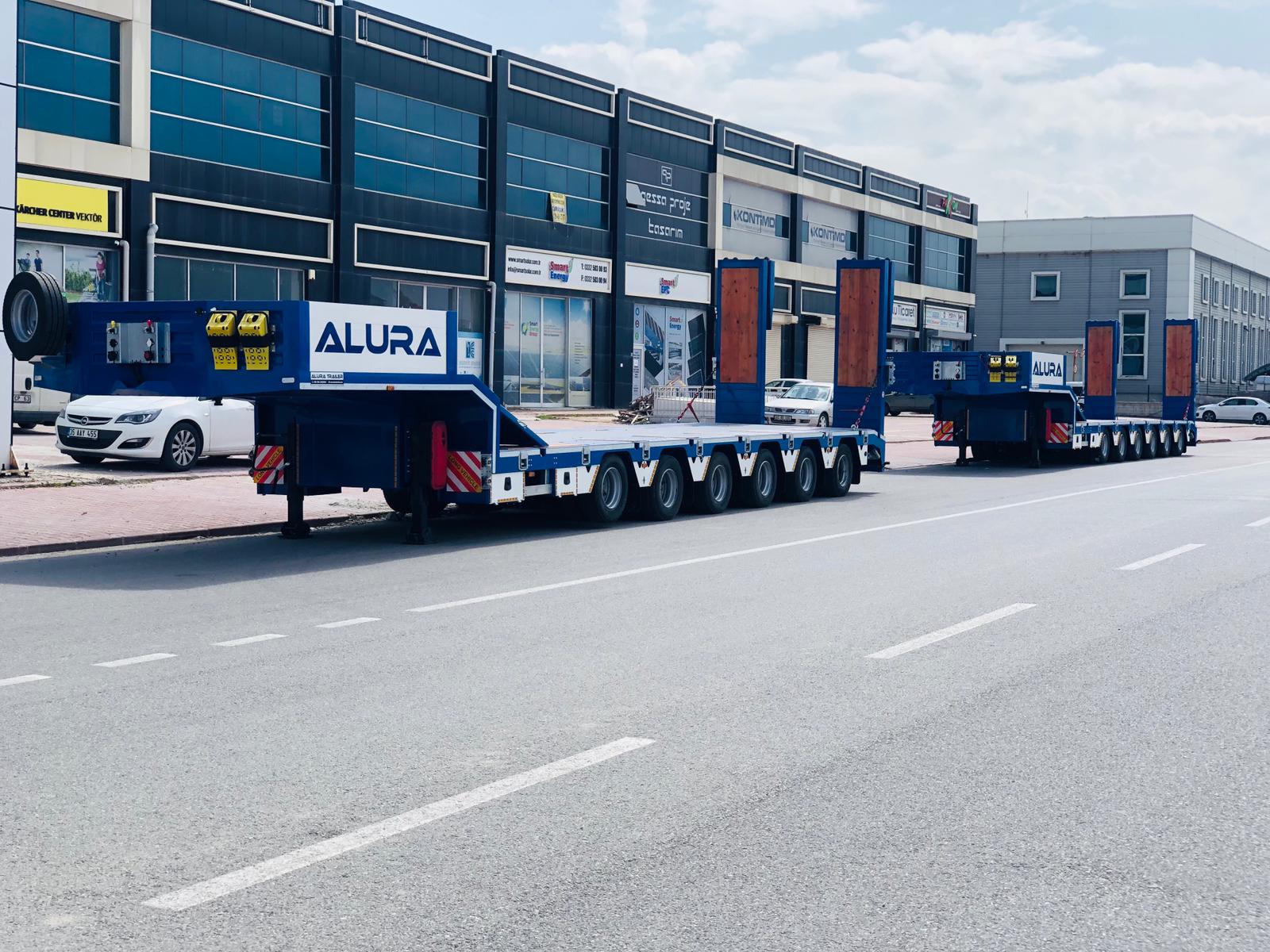
6 Axle Lowbed Trailer for Ultra-Heavy & Oversized Machinery Transport
Alura Trailer manufactures 6 Axle Lowbed Semi Trailers engineered for the transportation of ultra-heavy construction machinery, mining equipment, oversized project cargo, large excavators, bulldozers, crushers, drilling rigs and industrial modules requiring specialized load distribution.
Constructed using ST52 and Strenx 700MC high-strength structural steel options, these lowbed trailers feature extensively reinforced chassis structures designed to manage bending, torsional loading and concentrated cargo forces under approved design conditions.
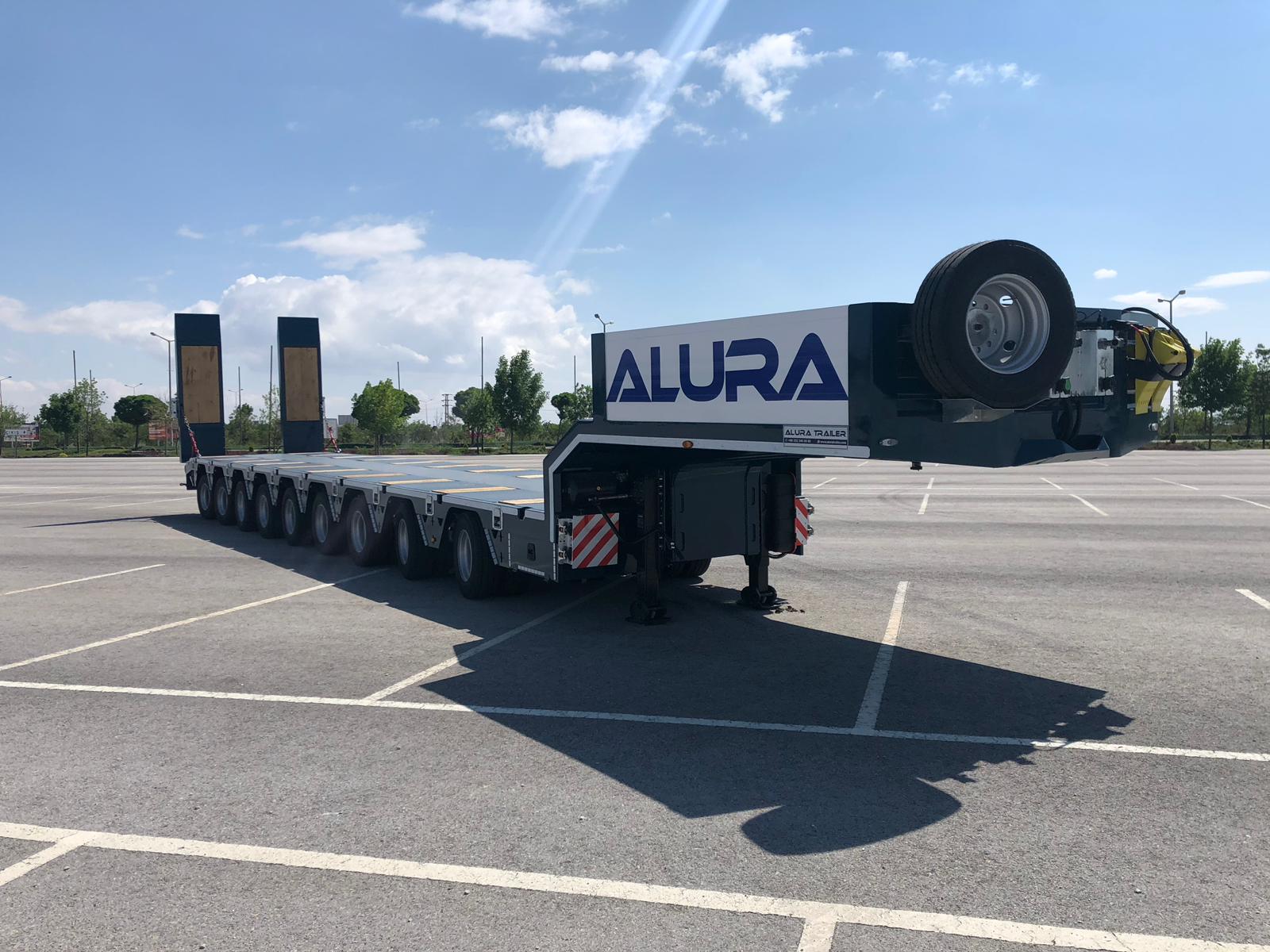
With a low deck height, extra-reinforced gooseneck structure, hydraulic or spring-assisted ramps and a six-axle configuration, this trailer is developed for heavy-haulage specialists, mining operations, infrastructure projects and international oversized transport applications.
Six-axle configurations require careful coordination between the trailer chassis, axle group, suspension, kingpin connection and tractor unit. The number of axles alone does not determine the maximum legal payload.
Six-Axle Lowbed Trailer at a Glance
The listed values describe possible configurations. Final specifications, permitted loads and dimensions are determined through the approved technical design.
Key Features & Advantages
- High-Strength Main Chassis: ST52 / Strenx 700MC reinforced I-beam construction with robotic welding options
- Axles: 6 × 12–13 tonne nominal ratings — SAF / BPW / Osman Koc options
- Suspension: Mechanical leaf spring or air suspension for selected operating conditions
- Ramps: Hydraulic or spring-assisted heavy-duty ramps with steel grid or hardwood surface options
- Gooseneck: Extra-reinforced heavy-duty structure with strengthened upper and lower plates
- Braking System: WABCO or Knorr-Bremse EBS / ABS options, with RSS where applicable
- Side Extensions: Detachable side brackets for additional platform width
- Flooring: Hardwood, chequered plate or wear-resistant steel flooring
- Tie-Down Points: Heavy-duty lashing rings and stake pockets
- Electrical System: 24V LED lighting with appropriate electrical sockets
This 6 axle lowbed configuration is intended for ultra-heavy machinery transport, oversized project cargo, large-scale infrastructure projects and specialized heavy haulage operations.
6 Axle Lowbed Semi Trailer Technical Specifications
| Component | Technical Specification |
|---|---|
| Chassis | ST52 / Strenx 700MC high-strength steel options; reinforced welded heavy-duty I-beam structure |
| Platform Height | Approx. 850–950 mm, configuration-dependent |
| Overall Length | Approx. 14,000–18,000 mm, configuration-dependent |
| Axles | 6 × 12–13 tonne nominal axle ratings |
| Axle Options | SAF / BPW / Osman Koc |
| Brakes | Drum or disc, depending on axle configuration |
| Suspension | Mechanical leaf spring or air suspension; lifting axle options subject to engineering approval |
| Ramps | Hydraulic dual-cylinder or spring-assisted ultra-heavy-duty ramps |
| Gooseneck | Extra-reinforced heavy-duty structure and kingpin plate |
| Steering | Fixed, self-tracking rear or multiple hydraulically steered axles |
| Tyres | 235/75 R17.5, 245/70 R17.5 or 275/70 R22.5, subject to design |
| Braking System | WABCO or Knorr-Bremse EBS / ABS; 6S/3M or 6S/4M options subject to brake design |
| Lighting | 24V LED lighting, appropriate electrical connections and applicable ECE requirements |
| Floor | Hardwood and/or 5–8 mm chequered steel plate in selected high-load areas |
| Paint | Grit blasting, epoxy primer and protective acrylic topcoat |
| Standard Equipment | Tool box, fire extinguisher cabinet, spare wheel carriers, wheel chocks, side reflectors and rear protection |
| Optional Equipment | Detachable gooseneck, multiple hydraulic steering axles, reinforced outriggers, side extensions, custom ramps, coil well, extra tool boxes and custom colours |
All specifications can be customized according to country regulations, axle load limits, machinery dimensions and fleet operational requirements, subject to engineering feasibility and approval.
5 Axle vs 6 Axle Lowbed Semi Trailer
A six-axle lowbed adds an additional axle position compared with a five-axle configuration. This may provide additional possibilities for distributing supported mass across the trailer axle group.
However, the additional axle also affects trailer tare weight, overall geometry, turning radius, tire scrub, suspension complexity and legal axle-group limits. The final selection must reflect the cargo and intended transport route.
| Technical Parameter | 5 Axle Lowbed | 6 Axle Lowbed |
|---|---|---|
| Axle Count | 5 | 6 |
| Combined Rating with 12 t Axles | 60 tonnes | 72 tonnes |
| Combined Rating with 13 t Axles | 65 tonnes | 78 tonnes |
| Approximate Length Range | 13–16 m | 14–18 m |
| Primary Applications | Very heavy machinery | Ultra-heavy and specialized project cargo |
| Steering Requirements | Dependent on geometry | Additional steering may be advantageous |
| Suspension Options | Mechanical / Air | Mechanical / Air |
| Legal Payload | Requires calculation | Requires calculation |
Nominal Axle Rating Comparison — 4, 5 and 6 Axles
This chart compares the arithmetic sum of individual axle ratings for selected lowbed configurations. It illustrates component rating differences, not the maximum cargo weight permitted on public roads.
Combined Nominal Axle Ratings
Scale: 78 tonnes = 100%. The chart presents nominal component rating sums only.
Understanding Six-Axle Lowbed Load Distribution
A semi-trailer transfers supported weight through the kingpin and fifth-wheel connection and the trailer axle group. The resulting reactions depend on the cargo's weight and center of gravity, the trailer's own mass distribution, and the positions of the support points.
Conceptual diagram only. Not a certified engineering drawing or approved loading plan.
Moving the cargo forward generally increases the kingpin reaction. Moving it rearward may increase the axle-group reaction. The actual distribution must be calculated for the combined trailer and cargo system.
For ultra-heavy transport, the engineering assessment must also include local platform loading, suspension load sharing, longitudinal bending, torsional effects and dynamic forces.
Can a Six-Axle Lowbed Carry 70, 80, 90 or 100 Tonnes?
The suitability of a six-axle lowbed for a particular cargo weight cannot be determined from the number of axles alone. The trailer must be assessed as part of a complete transport combination.
70-Tonne Cargo
Requires calculation of axle-group reactions, kingpin load, structural limits, tractor capacity and applicable road limits.
80-Tonne Cargo
Requires detailed engineering review. A combined nominal axle rating of 72–78 tonnes does not itself authorize an 80-tonne payload.
90-Tonne Cargo
May require a specialized heavy-haul configuration, different axle arrangements or alternative transport equipment.
100-Tonne Cargo
Requires project-specific structural, vehicle-combination and route assessment. Modular or other special transport solutions may need consideration.
Six-Axle Steering Systems and Turning Performance
With six axle positions, steering geometry becomes particularly important for tight industrial sites, port terminals, mining areas and infrastructure projects.
Fixed Axles
A mechanically straightforward arrangement. Turning behavior and tire scrub must be considered in relation to axle spacing and operating conditions.
Self-Tracking Axles
Selected rear axles may follow the turning path under appropriate conditions. Reversing and axle-locking arrangements require attention.
Hydraulic Steering Axles
Multiple hydraulically steered axles can be evaluated for restricted turning areas and specialized heavy-haul operations.
Why Steering Matters on a Six-Axle Lowbed
A longer axle group can increase lateral tire forces during tight turns. An appropriately engineered steering arrangement may help manage maneuverability and tire scrub, but adds components, controls and maintenance considerations.
Mechanical vs Air Suspension for Six-Axle Lowbeds
| Consideration | Mechanical Suspension | Air Suspension |
|---|---|---|
| Operating Principle | Mechanical spring and equalization arrangement | Air springs with leveling and control equipment |
| Ride Characteristics | Dependent on spring and load design | Can offer different ride and leveling characteristics |
| Maintenance | Mechanical wear points and inspection | Air lines, valves, air springs and controls |
| Load Sharing | Depends on equalization geometry | Depends on pneumatic system and axle arrangement |
| Selection | Project and road dependent | Project and road dependent |
Reinforced Chassis for Ultra-Heavy and Concentrated Loads
Heavy equipment does not necessarily distribute its weight uniformly across the loading deck. Crawler tracks, machine wheels and industrial support points can create concentrated loading.
Longitudinal Bending
Main beams must be assessed for bending moments generated by cargo weight and support geometry.
Torsional Rigidity
Uneven road conditions and asymmetric cargo loading can introduce significant torsional forces.
Local Deck Reinforcement
Crawler contact areas and concentrated equipment support points may require additional structural reinforcement.
Gooseneck Structure
The gooseneck and kingpin assembly must be designed for the calculated fifth-wheel reaction and operating loads.
Hydraulic Ramps, Loading Angles and Machinery Clearance
The loading system must be selected according to the machinery's operating weight, track width, ground clearance, contact pressure and approach angle.
Hydraulic Dual-Cylinder Ramps
- Powered ramp operation
- Custom ramp length options
- Steel grid or other suitable surfaces
- Project-specific hydraulic and locking systems
Spring-Assisted Ramps
- Mechanically assisted operation
- Alternative ramp handling arrangement
- Requires appropriate locking and balance
- Must be designed for the loading case
Industrial Applications for Six-Axle Lowbed Trailers
Mining Machinery
Transport solutions for large mining equipment and heavy machinery moving between project and service locations.
Construction Equipment
Large excavators, bulldozers, crushers, graders and specialized construction machinery.
Energy Projects
Large industrial components and equipment used in energy generation, transmission and infrastructure projects.
Industrial Project Cargo
Oversized modules, transformers, fabricated structures and other special transport cargo.
6 Axle Lowbed Semi Trailer Photo Gallery
Explore Alura Trailer six-axle lowbed configurations and project photographs. Images may show different optional equipment and production specifications.
6 Axle Lowbed Trailer Technical Drawing
Below is the engineering drawing for the 6 Axle Lowbed Semi Trailer. Final dimensions and load specifications must be confirmed against the approved project drawing.

Technical Documents and Catalogues
6 Axle Extendable Lowbed PDF
Technical document relating to a six-axle extendable lowbed configuration.
Open 6 Axle Lowbed PDFAlura Trailer E-Catalogue
General product catalogue with trailer information and available product configurations.
Open E-CatalogueVideo: Lowbed Trailers — Alura Trailer
💰 Price of This Configuration
Click to view the indicative starting price and contact our sales team.
Request Full Technical Offer for the 6 Axle Lowbed Trailer
Need a detailed technical quotation including axle configuration, gooseneck design, ramp type, suspension options and loading diagrams? Our engineering and sales team can prepare a technical-commercial proposal tailored to your machinery, destination regulations and operating conditions.
Lowbed Trailers for Heavy Machinery & Project Cargo — Engineered for Real Industry Needs
Alura Trailer's 6 Axle Lowbed Trailers are developed for professional heavy-haul operators moving construction machinery, mining equipment, industrial components and specialized project cargo.
Construction & Mining Machinery
Designed for excavators, bulldozers, wheel loaders, graders, crushers and other heavy-duty machines.
Project & Industrial Cargo
Configurations for transformers, industrial modules, prefabricated units and large steel structures.
Flexible Ramp & Axle Options
Hydraulic or spring ramps, different ramp lengths, fixed or steering axles and optional lifting axle arrangements.
Export-Ready Design
Configurations can be reviewed for African, Middle Eastern and European markets, including suspension, braking and documentation requirements.
Submit your requirements to explore technical data, drawings and component options.
Export Documentation and Heavy-Haul Road Compliance
International transport of ultra-heavy machinery may require route surveys, special transport permits and vehicle documentation in addition to the trailer's technical configuration.
Alura Trailer can review project-specific configuration and documentation requirements during the quotation process. Availability of particular certificates or approvals must be confirmed for the selected trailer.
How to Specify a Six-Axle Lowbed for Your Project
Cargo Details
Provide machinery weight, length, width, height, track dimensions and center of gravity where available.
Tractor and Route
Specify tractor configuration, fifth-wheel rating, operating country, transport route and road conditions.
Trailer Equipment
Select preferred axles, suspension, steering, ramps, side extensions, flooring and documentation requirements.
Frequently Asked Questions About 6 Axle Lowbed Trailers
What is a 6 axle lowbed semi trailer?
A six-axle lowbed is a specialized semi-trailer with six axle positions and a low loading platform, designed for heavy machinery and oversized project cargo within its approved structural and regulatory limits.
What is the nominal axle capacity of a 6 axle lowbed?
Six axles individually rated at 12 tonnes have a combined nominal rating of 72 tonnes. Six axles rated at 13 tonnes total 78 tonnes. These values are component rating sums, not certified payload or legal axle-group limits.
What is the difference between a 5 axle and 6 axle lowbed?
A six-axle configuration adds an axle position and can offer additional load distribution possibilities. It also changes tare weight, axle spacing, steering geometry and regulatory considerations.
Can a 6 axle lowbed carry 80 tonnes?
Cargo suitability cannot be established from axle count alone. The chassis rating, trailer tare, kingpin reaction, tractor, load placement, axle-group limits and route permissions must all be assessed.
Can a six-axle lowbed transport 100 tonne machinery?
A 100 tonne cargo requires a dedicated engineering and route assessment. A conventional six-axle lowbed should not be assumed suitable without a verified structural design and approved transport arrangement.
Is hydraulic steering available?
Multiple hydraulically steered axles can be evaluated as a project-specific option, depending on trailer geometry, operational requirements and engineering feasibility.
Can the trailer have self-steering axles?
Self-tracking rear axles may be available in suitable configurations. Reversing, steering locks and axle loads must be considered.
What is the approximate loading height?
The listed platform height is approximately 850–950 mm, depending on tire selection, chassis design and suspension configuration.
What is the overall length?
The listed overall length range is approximately 14,000–18,000 mm. Final dimensions are defined in the approved manufacturing drawing.
Are hydraulic ramps available?
Yes. Hydraulic dual-cylinder and spring-assisted heavy-duty ramps are among the available options, subject to machinery weight and loading geometry.
What steel is used in the chassis?
ST52 and Strenx 700MC high-strength structural steel options are listed. The final material specification and structural arrangement are determined for the project.
Which axle brands are available?
SAF, BPW and Osman Koc axle options are listed, subject to technical configuration and component availability.
Is a detachable gooseneck available?
A detachable gooseneck can be considered as an optional project-specific solution, subject to structural feasibility.
Can the loading platform be widened?
Reinforced outriggers and removable side extensions may be specified, subject to the approved loading design and legal transport width requirements.
Is the six-axle lowbed suitable for international transport?
International use depends on vehicle approval, country-specific dimensions, axle-group limits, tractor compatibility, transport permits and required documentation.
What information is needed for a technical quotation?
Provide cargo weight, dimensions, center of gravity if available, tractor configuration, destination, route conditions and preferred suspension, axle, steering and ramp options.
What is the starting price?
The indicative starting price displayed on this page is EUR 52,000. Final pricing depends on the configuration, optional equipment and delivery terms.
Compare Other Lowbed Trailer Configurations
Different lowbed configurations can be evaluated according to cargo weight, platform geometry, axle distribution and loading requirements.